Showing posts with label matt kelland. Show all posts

Monday, 7 November 2011

Making Better Movies with Moviestorm - change to Volumes 3 & 4

Earlier today, I finished the first draft of Volume 3 of my series of books about using Moviestorm to help make better films. The preceding two covered camerawork and staging, and this one, originally due to be published in a few weeks, covers editing.

After re-reading it, I decided to hold that volume and publish it as Volume 4 at the end of December. Instead, I'll cover sound and lighting in Volume 3. This was originally planned for Volume 4. Fortunately, it's mostly written, so I'll be able to stay with the schedule for monthly releases, and Volume 3 will still be out in early December.

Throughout the book on editing, I kept referring to things you could do with sound and light, and several of the exercises had footnotes saying "this will be covered in more detail in Vol 4". That just felt wrong to me. It made more sense to deal with those techniques earlier in the series, and then refer back to them in the editing exercises.

More importantly, though, it also fits with my philosophy on filmmaking.

For me, the film isn't made by the director. It's not about what happens on the set. A film is made by the editor. The only time the director gets to make a film, unless they're doing the whole thing themselves, is when they release a Director's Cut - and that's not always a guarantee it'll be better than the original.

It's the editor who assembles everything, and who decides what is in the film and what isn't. It's the editor who blends the visual and the audio. It's the editor who creates the context for each shot by deciding what comes before and after. The editor can completely change a film, even to the extent of turning a horror movie into a comedy, or lacklustre documentary footage into an absorbing visual essay.

All the time I was writing this series, I felt that I wanted to start with how to create great shots, and then end with an entire volume on how to put them together into a finished movie, so that's the way it's going to be.

Tuesday, 25 October 2011

Making Better Movies, Vol 2, coming soon

The next part of Matt's series of books will be out soon. As before, it'll be a free download.

Here's what previewers have said about it:

It proved to be useful as I was teaching Maya to some 2D animators who work on Peppa Pig. There is a marked difference in thinking for 2d animation and 3d shots, especially the use of physical depth. It saved me tearing my remaining hair out when trying to set up and explain the staging and set construction. I usually work backwards in Maya, blocking out the set/camera etc to get rough story shots, so I know how much set to build and how detailed the props/characters need to be.

The practicality of learning these techniques in Moviestorm, rather than just the theory, gives you an easier way to fix these concepts in your head. I also like the lack of 'what buttons do I press': this gives the reader more control over what they have learned and how it's implemented, and it makes the volume concise. Good solid info on staging a scene, lots of ideas and suggestions for the filmmaker, and it doesn't bog you down with extraneous info (or technical programme specific information). A really good primer for any film student, especially all crammed into 40 pages.

Andrew Segal, Carshalton College

The idea itself is very solid. If someone goes through the book and does the exercises, they're going to come out a better filmmaker, no question.

Hugh Hancock, Guerilla Showrunner

An excellent resource for both new and veteran users. The exercises are easy to follow and designed to give Moviestorm users a whole new perspective on moviemaking. By following the exercises you begin to understand the importance of staging, which will take your movie to a new level. He doesn’t just describe ways to add feeling to your movies, but shows you through the easy to follow steps. All great directors have their own style. In this book Matt gives you the keys to unlock your style. In the end, you decide which techniques work best for you.

Shirley Martin, filmmaker

The book's currently going through final editing, and should be available in early November.

Monday, 19 September 2011

Making Better Movies with Moviestorm

A while ago, we mentioned that Matt was working on a book about using Moviestorm to help practice film techniques. It's been a background task for about six months now, but at last it's getting closer to completion.


It'll be released initially as a series of short e-books, covering basic camerawork, staging, editing, lighting, sound, and miscellaneous techniques.

Each contains 15-20 exercises designed to help you develop your filmmaking technique. Whether you use Moviestorm, other animation tools, or live action to make your movies, you'll find these a useful way to focus on specific skills. Each exercise requires you to film a short scene in several different ways so that you develop familiarity with the various approaches available to you. You may be required to work within constraints such as not being allowed to move the camera or making the scene a specific length, or the exercise may be about filming a particular piece of story.

How do you get good at telling stories with cinema? It comes down to experience, of course, and experience comes through practice. So how do you get experience in film making, when it takes so much to make even the simplest piece of film? You have to find actors and crew, there are lights and cameras to buy, writers to bully, locations to find… and there are some scenes you just can’t film at all without a crazy budget. It’s a problem filmmakers have faced for a hundred years. But now there’s a solution, in the form of Moviestorm.

You see, Moviestorm doesn’t just allow you to make finished movies if you are already an accomplished storyteller. It allows you to grow your own talent by putting in movie making hours.

As I said earlier, in the world of filmmaking, practice usually involves a lot of equipment, money and mostly time, both yours and other people's. It's hard for most people to put in the hours. It’s a lot like a pilot who hasn't got easy access to a plane. So what does he do? He books time in a simulator. Even if a trainee pilot has regular access to a plane, he still books a lot of time in a simulator because it's cheaper and safer than using a real plane. He can practice whenever it’s convenient, and by logging enough hours he improves his skills almost automatically.

The same is true of any technical ability which has some art to it. The more you do it, the better you get. It's a creative muscle memory. It's the same with creativity and mastery of your storytelling chops. The more you do it, the better you will get. Shots flow to shots in a seamless hypnotic glide, because you know what you are doing and you know exactly where to go at any one time, in the service of your story.

This excellent series of books will guide your development. In each of the carefully structured and easy to follow exercises Matt leads you through all the movie making tricks you will need, from the most common to the most difficult. It's an easy regime to follow: just read what's on the page and do it. Then do the next one, and the next, and work your way through Pretty soon you'll be flying through them and your mastery of both Moviestorm and film technique will grow.

From the foreword by Phil South


The first volume, Basic Camerawork, will be published in early October, with the remaining volumes following monthly. These will be available free through Moviestorm.

Saturday, 19 February 2011

Matt's talking... again

I'm just about to record a half-hour internet radio show with Michael Cornetto of Simply Scripts. He's the man behind The Dark anthology, a horror series made in Moviestorm. He's based in Melbourne, Australia, one of the co-hosts, Pia, is in Gainesville, North Florida (a few hours drive from me), and the third guy, Don, is in Virginia, so we're doing it all via Skype.

The show, Simply Radio, is aimed primarily at scriptwriters, and we'll be talking about how Moviestorm can be useful to creative people who normally aren't involved in the film-making process. I'm not sure when it's going out, but when I do, I'll let you know.


Tuesday, 8 September 2009

Congratulations Matt!

You may have noticed the suspicious absence recently of Short Fuze's esteemed co-founder, Matt Kelland. That's because he's just got married. So, congratulations Matt, from the whole Moviestorm team, and best of luck for the future to you and Anna.

Tuesday, 10 March 2009

SF in SF

If you're going to GDC09 in San Francisco (March 23-27), the Game Developer's Conference, keep an eye out for Dave, who'll be wandering the halls, searching for interesting people to share a beer with and chat about anything and everything.

Meanwhile, Johnnie and Matt get to go to the annual OCR AS/A Level Media Studies conference in London on March 20, where they will be presenting Moviestorm. You can find out more here and book a place here.

Which means we'll get home in time for a nice cup of tea and a biscuit, while Dave has to spend hours on a plane and hanging around in airports. Oh, the glamour of international travel!

Wednesday, 25 February 2009

Tough times at Moviestorm Towers


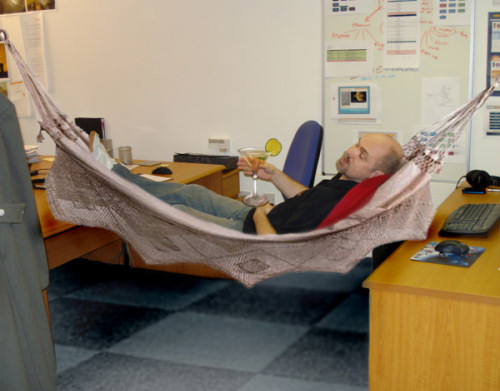
It's a hard life making Moviestorm, you know. I specifically asked for a purple umbrella in my daiquiri, but did I get one?

Wednesday, 15 October 2008

Moviestorm in New York

In a couple of weeks, Short Fuze is despatching an elite squad of ninja machinima evangelists to take Gotham by 'storm. Armed only with laptops, beer and charisma, they'll sneak into Times Square during the Halloween celebrations. Their mission is to infiltrate the Machinima Film Festival, brainwash the attendees into abandoning Second Life, and hold Overman hostage until he agrees to rename the Overcast The Moviestorm Show.

Well, when we say "elite", we mean Matt & Johnnie. Look for the guy in the hat or his tubby bitch and they'll buy you a beer (or other tasty beverage if you're not a beer-drinking type). Chances are if you're reading this, you're already a convert to the True Faith, so they won't preach at you and threaten you with disembowelment if you don't download Moviestorm immediately. Instead, they'll listen to your endless suggestions for improvements and new content packs, and relay them back through the interweb to the Moviestorm Command Centre (Europe), where, um, something may happen as a result.

Matt will also be sharing a stage with John Martin of Reallusion championing the cause of non-game machinima tools in a panel on Interfacing Virtual Actors. They will be joined by Ken Perlin of the NYU Media Lab and Michael Nitsche of Georgia Tech.

Come along if you can. It'll be a blast!

Friday, 20 June 2008

Machinima. It's Serious.

On Monday 23rd I'm speaking at the Serious Games conference in Cambridge. I'm doing a panel with Saint John Walker of FDMX entitled Machinima and Cineliteracy: Learning Film-Making Virtually. We're looking at ways in which machinima can be used to teach people how to express themselves audio-visually by introducing them to the grammar of film-making, and the basic concepts of choreography, cutting, and reportage. We're then exploring ways in which being able to use audio-visual media effectively can affect education methods.

It's not just a Moviestorm plug - we'll also be covering machinima made with Antics, Second Life, and others.

If you're there, come and say hello.

Tuesday, 29 January 2008

books!

I had the sudden realization that I'm the only person on the dev/doc team that hasn't written a book. It makes me feel humble to be in the presence of such great minds as the authors of:


Machinima - Dave Lloyd & Matt Kelland

Machinima for Dummies -Johnnie Ingram & Hugh Hancock (send us your pic Hugh!)


3D world (regular contributions) - Chris Ollis

Actually looking at that lot, I'm quite glad I havn't written a book. I think I might even stop writing my diary - just in case ;)